

10 school student teams, a creative challenge, and an opportunity to turn technology into a learning tool. The 2026 edition of the 3D Modeling and Printing Competition kicked off on October 5, with the first online training session organized by Măgurele Science Park.
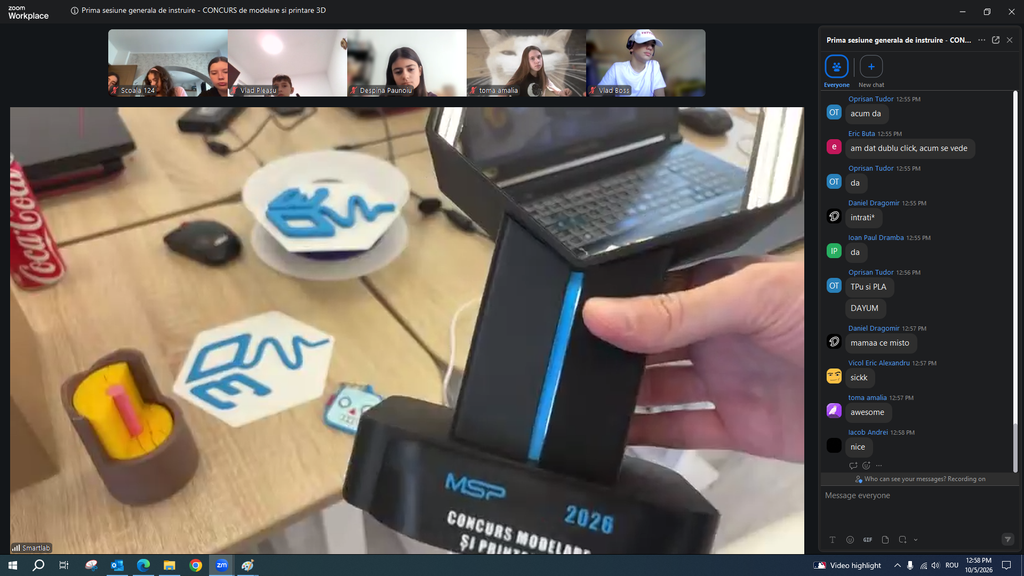
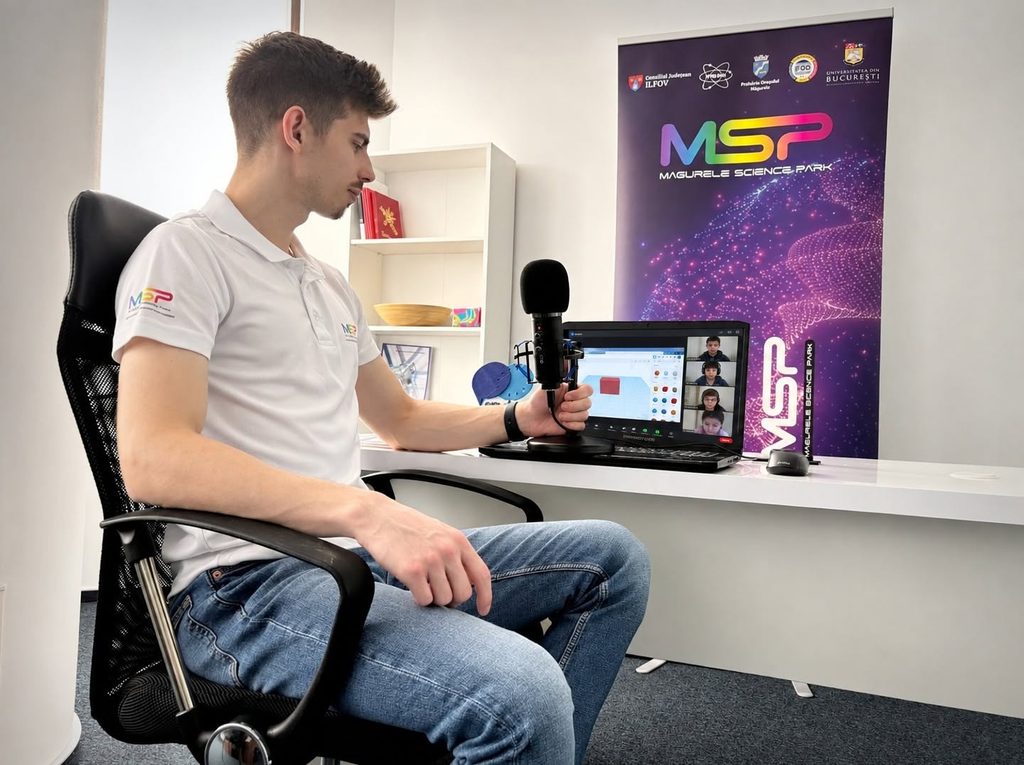
On October 5, Măgurele Science Park (MSP) launched the online training sessions dedicated to the 10 teams selected to participate in the 3D Modeling and Printing Competition. Through the Zoom platform, students took their first steps into the world of 3D technology and learned more about this year’s challenge, the stages of the competition, and the resources provided by MSP.
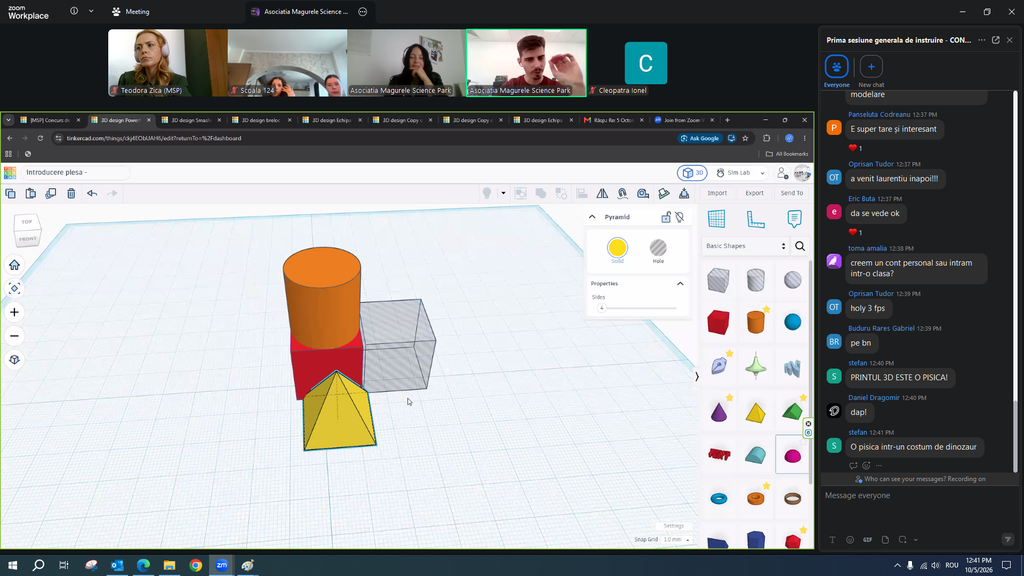
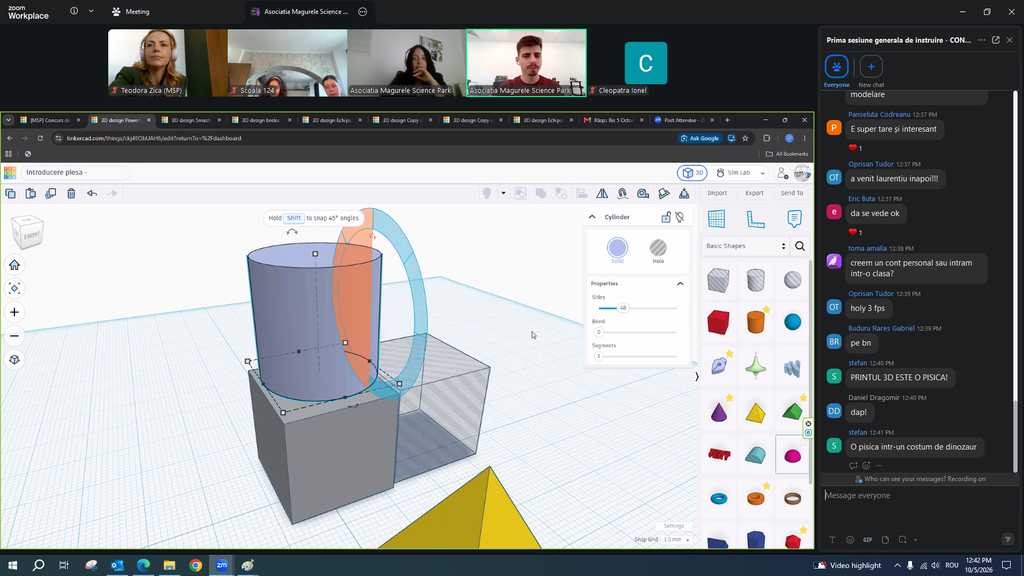
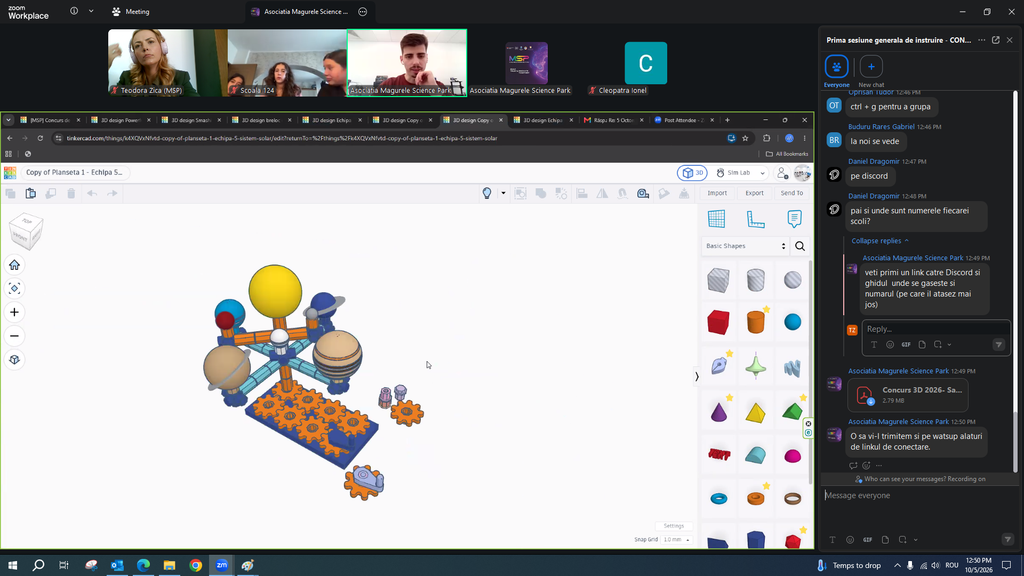
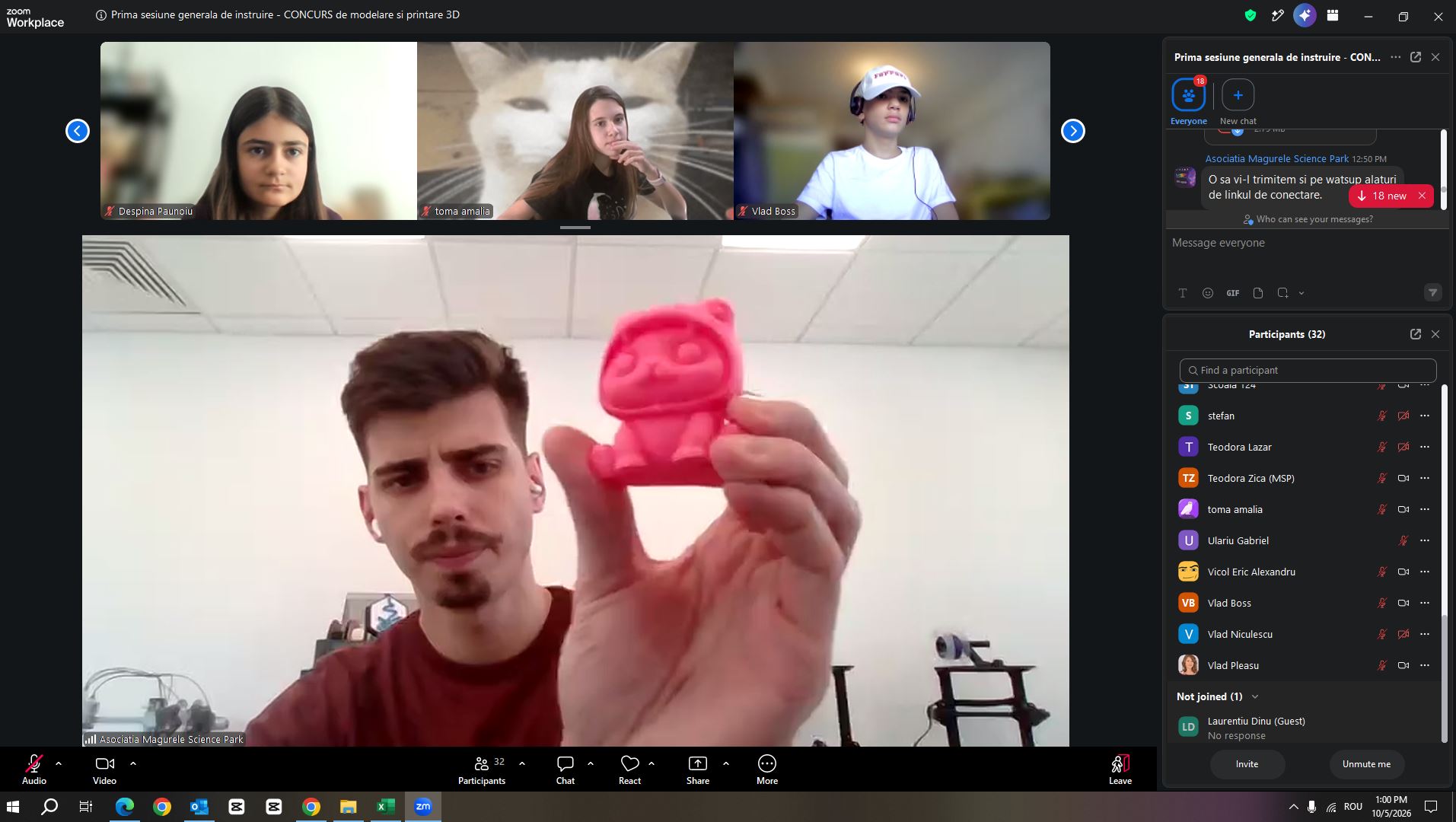
This year’s challenge invites participants to create a 3D object that can be used in school subjects, combining creativity and technology with the learning process. To develop their projects, students will use Tinkercad, an intuitive 3D modeling platform that allows them to design digital objects and explore the possibilities of three-dimensional design.
The competition is about much more than acquiring technical knowledge. It is an educational experience that encourages students to develop new skills, strengthen their digital competencies, collaborate, and work as a team. At the same time, participants have the opportunity to showcase their imagination and find creative solutions to a real-world challenge.
The stakes are even more exciting: the three highest-ranking schools will each receive a 3D printer, providing students and teachers with new opportunities for hands-on learning and practical projects.
Year after year, students impress us with the originality and ingenuity of their creations. The 2026 edition offers yet another opportunity to discover how technology and creativity can be used to enhance the learning experience.
What Is 3D Modeling?
3D modeling is the process of transforming an idea into a three-dimensional digital model using specialized software. Unlike a conventional drawing, a 3D model has length, width, and height and can be viewed from different angles, modified, and adapted to suit its intended purpose.
Through 3D modeling, students can design objects that help them better understand concepts taught at school, ranging from geometric shapes and three-dimensional forms to scale models, explanatory models, and interactive educational materials.
What Is 3D Printing?
3D printing is a technology that transforms a digital model into a physical object. Using a 3D printer, the object is generally created by depositing successive layers of material until the designed shape takes form.
This technology is used in a wide range of fields, including engineering, medicine, architecture, research, and product development. 3D printing enables rapid prototyping, the testing of solutions, and the creation of objects tailored to specific needs.
In education, this technology can transform the way students interact with information. A digital model can become a physical object that students can observe, handle, and use to better understand a concept.
In this way, 3D modeling and printing establish a direct connection between ideas, design, and practical application, giving students the opportunity to see tangible results from their work.
Why Is It Useful to Teach Children 3D Modeling and Printing?
Introducing students to 3D technologies helps them develop important skills for both their educational journey and their future careers. Moreover, the opportunity to design an object that can be used in the classroom helps them understand that technology is not just a digital tool, but also a way to find practical solutions.
What Do Students Gain?
- Creativity and critical thinking
Students are encouraged to identify a need, develop an idea, and find a solution. Throughout the design process, they can test different approaches, evaluate what works, and improve their creations.
- Learning through practical application
A 3D object can make a concept easier to understand when it might otherwise seem abstract if presented only in theory.
- Digital skills development
Using Tinkercad helps students become familiar with computer-aided design and learn how to use technology to create their own solutions. These skills can provide a foundation for exploring other digital tools and technical fields.
- Collaboration and teamwork
Participants must share their ideas, consider their teammates’ suggestions, and make decisions together. Through collaboration, students develop communication, organizational, and teamwork skills, as well as a sense of responsibility.
- Confidence in their own ideas
Transforming an idea into a digital model and, eventually, a physical object gives students the satisfaction of seeing the results of their efforts.
From Online Training to Hands-On Experience
The first training session, held online on October 5, marked the starting point for the 10 participating teams.
At the end of October and the beginning of November, participants will continue their training through in-person sessions. These will represent the next stage of their journey, giving them the opportunity to deepen their knowledge and gain hands-on experience with 3D technologies.
The transition from online training via Zoom and Discord to in-person activities will allow students to strengthen their skills and further develop their projects, with the goal of creating a 3D object that can be used in school subjects.
We look forward to discovering the students’ creations in this year’s edition. We wish all participants the best of luck!


